Introduction
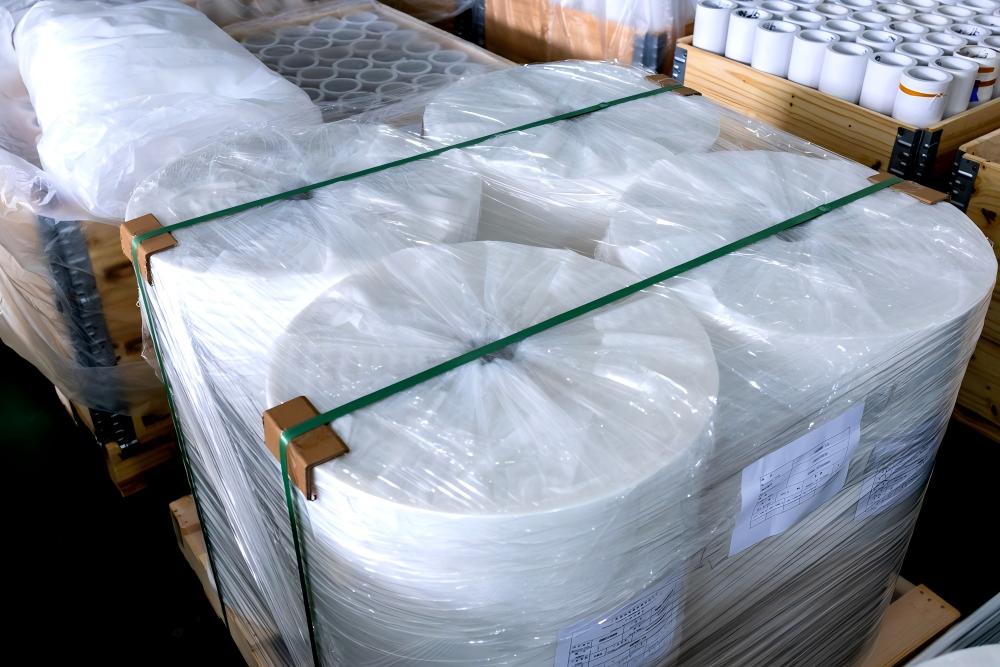
PE heat shrink film and stretch wrap film are two of the most commonly used industrial packaging materials for pallet consolidation and cargo protection. Many procurement and packaging engineers easily confuse the two films due to their similar outer application scenarios for bundled goods. However, their working principles, operating conditions, protective performance and applicable scenarios are completely different.
Misselection often leads to loose packaged cargo, poor waterproof protection, increased packaging costs, or unqualified container loading. This article systematically compares PE heat shrink film and stretch wrap film from core working logic, performance characteristics and industrial usage, helping you pick the correct packaging material for palletized shipment and storage.
Core Working Principle Difference (Most Fundamental Distinction)
The essential gap between the two films lies in their tightening mechanism, which determines all subsequent performance differences.
PE Heat Shrink Film: Thermal Energy Dimensional Contraction
PE heat shrink film is a thermally responsive packaging material that only shrinks under high temperature heating of 150℃–220℃. It relies entirely on thermal energy to trigger molecular contraction, making the film tightly fit the outer contour of grouped cargo. No mechanical stretching or pre-tension force is involved in the entire working process. After cooling, the film forms a rigid, fully enclosed protective shell for integrated cargo.
Stretch Wrap Film: Mechanical Tension Rebound Bundling
Stretch wrap film depends on manual or mechanical pre-stretching at room temperature. It uses the film’s inherent ductility and rebound tension to wrap and bind pallets. The tightening effect comes from continuous mechanical tension, with no heating or thermal deformation required during operation.
Key Performance & Functional Differences
Sealing & Barrier Performance
PE heat shrink film forms a completely closed outer layer after thermal shrinkage and cooling. It delivers excellent waterproof, dust-proof and moisture-proof barrier effects, effectively resisting sea splash, humid air and dust contamination during long-distance ocean transportation.
Stretch wrap film adopts overlapping winding packaging, which leaves tiny gaps between wrapping layers. It can only provide basic dust prevention and anti-loosening effects, and cannot achieve fully sealed waterproof protection, making it unsuitable for high-humidity marine logistics.
Cargo Fixing & Stability
Heat shrink film wraps the entire pallet cargo as a whole. After cooling and shaping, it has no loose rebound space, maintaining stable cargo integration even during violent transportation vibration and container stacking.
Stretch film bundling relies on continuous tension extrusion. Long-term transportation vibration will cause gradual tension relaxation, leading to loose cargo displacement and messy pallet arrangement.
Material Toughness & Durability
PE heat shrink film features superior flexibility, impact resistance and tear resistance. Compared with brittle PVC shrink film and conventional stretch film, it is not easy to crack when wrapping sharp-edged metal profiles and hardware cargo, with stronger overall packaging durability.
Applicable Industrial Scenarios
PE Heat Shrink Film Preferred Scenarios
It is mainly used for industrial integrated collective packaging and export sea shipment. Typical applications include aluminum profiles, steel pipes, auto parts pallets, hardware assemblies and bulk beverage bundles. It is the best choice for scenarios requiring full sealing, moisture resistance and long-distance cross-border transportation.
Stretch Wrap Film Preferred Scenarios
It is suitable for short-distance inland transportation, workshop turnover and ordinary warehouse storage. It focuses on low-cost anti-loosening bundling, and is mostly used for pallet temporary fixing of non-moisture-sensitive ordinary cargo.
Cost & Operation Efficiency Comparison
Stretch wrap film has lower single-material cost and simpler operation without supporting heating equipment, suitable for low-budget short-cycle packaging demands.
Although heat shrink film requires thermal shrink tunnel equipment and slightly higher material cost, it can replace traditional carton packaging in many scenarios, reducing comprehensive packaging costs by up to 50%. Its high sealing and anti-loosening performance greatly reduces cargo damage and return losses during export transportation, with higher overall cost performance.
Frequently Asked Questions
Q1: Can heat shrink film be used for room-temperature winding and bundling?
A: No. PE heat shrink film has no self-adhesion and room-temperature tightening ability. It cannot fix cargo by winding, and only works after high-temperature heating shrinkage.
Q2: Is stretch film suitable for metal hardware sea export packaging?
A: Not recommended. The gap structure of stretch wrapping cannot block humid sea air, which easily causes metal condensation and rust during long-term marine transportation.
Q3: Which film is better for large construction profile pallet packaging?
A: PE heat shrink film is preferred. Its overall shaping and impact resistance can protect long profiles from collision deformation and moisture erosion during transportation.
Q4: Can the two films be used interchangeably?
A: They cannot be substituted for core scenarios. Stretch film can only replace heat shrink film for temporary inland turnover without sealing requirements.
Conclusion
The core difference between PE heat shrink film and stretch wrap film lies in the tightening principle and sealing performance. Heat shrink film relies on high-temperature thermal contraction to form an integrated fully sealed package, suitable for high-standard export transportation and moisture-sensitive industrial cargo. Stretch film relies on mechanical tension bundling, only applicable for ordinary temporary fixed packaging. Selecting packaging materials based on transportation scenarios can effectively avoid cargo loss and cost waste. If you need customized industrial PE heat shrink film for pallet export packaging, contact Paiki for professional solutions and free test rolls.