Industry Overview & Market Background
Food packaging is one of the largest application markets for PE films. The global food-grade PE cling film market was valued at USD 13.49 billion in 2025 and is projected to reach USD 23.38 billion by 2032, at a CAGR of 8.17%. The global food-grade multi-layer co-extruded film market reached RMB 291.7 billion in 2025. Multi-layer co-extruded films are not only suitable for vacuum packaging of seafood, fresh meat, and cured products but are also widely used for cheese, deli products, dried fruit, and frozen foods. Future trends point toward functional integration, low-carbon environmental protection, and lightweight development.
Meanwhile, the EU Packaging and Packaging Waste Regulation (PPWR), plastic taxes, and EPR fees are driving 100% recyclable packaging goals for 2026-2035 roadmaps. Currently, only approximately 5% of legacy multi-layer flexibles are recycled, while mono-materials unlock curbside and drop-off recycling streams.
Industry Pain Points
Food processors face three major challenges with packaging materials:
1. Insufficient Freshness Preservation & Barrier Performance – The “Achilles’ Heel” of Shelf Life
Traditional single-layer or basic 3-layer co-extruded PE films inherently have high Oxygen Transmission Rates (OTR). High OTR means packaged food continuously contacts oxygen, leading to oil oxidation and rancidity, color changes, flavor loss, and vitamin degradation. For oil-containing foods, easily oxidized foods, and products requiring long-term storage, standard PE films cannot effectively extend shelf life. High Water Vapor Transmission Rate (WVTR) causes food to dry out or absorb moisture and spoil. Quality high-barrier packaging requires both OTR and WVTR below 1 cc/m²·day or 1 g/m²·day.
2. Food Safety Compliance Risks – The “Red Line”
Food contact materials must meet strict standards from FDA (US), EU, and GB (China) markets. Additives used in standard PE films (such as slip agents, anti-static agents, and antiblocking agents) may migrate into food, creating food safety risks. Additionally, the use of recycled materials and production environment contamination pose compliance concerns.
3. Sustainable Packaging Pressure – Regulatory “Push”
Traditional multi-material composite packaging (such as PET/PE, PA/PE) is virtually non-recyclable due to material separation difficulties. Facing increasingly strict environmental regulations (such as EU PPWR requiring all packaging to be recyclable by 2030), food companies urgently need alternatives that maintain high performance while being recyclable.
Our Solution
We provide safe, high-performance, and sustainable PE packaging for the food processing industry:
1. Food-Grade Raw Material Guarantee – Safety from the Source
FDA-certified (21 CFR 177.1520) food-grade virgin PE resin is used, with all additives (slip agents, anti-static agents, antiblocking agents) compliant with food contact material regulations. Every batch comes with a COA (Certificate of Analysis) for full traceability. Production workshops strictly follow GMP (Good Manufacturing Practice) to prevent cross-contamination.
2. High-Barrier Multi-layer Co-extrusion Technology – Freshness Through Structure
Using multi-layer co-extrusion (3-layer, 5-layer, or even 7-layer), different functional resin layers are combined into a single film. A typical barrier structure includes: outer layer (mechanical strength + heat-seal layer), middle barrier layer (EVOH or PA for oxygen barrier), and inner layer (food contact layer for safety and hygiene). By optimizing layer thickness ratios and material selection, we achieve:
OTR < 1 cc/m²·day
WVTR < 1 g/m²·day
Significantly extended food shelf life, locking in flavor and nutrition
3. Mono-Material Recyclable Design – Balancing Performance and Sustainability
Using an all-PE mono-material structure design, different functional PE layers are combined through multi-layer co-extrusion to achieve high barrier performance while maintaining material singularity — the entire package can enter PE recycling streams for single-stream recycling. This positioning helps clients proactively meet EU PPWR and other environmental regulations.
4. Precision Heat-Sealing Technology – Compatible with High-Speed Automated Lines
By precisely matching heat-seal temperature, pressure, and time, consistent seal strength is ensured. Low-temperature heat-seal formulations enable reliable sealing at lower temperatures, compatible with high-speed automated filling lines (up to 60-120 bags/minute), improving production efficiency and reducing energy consumption.
Related Products
Product Name Key Features Typical Applications
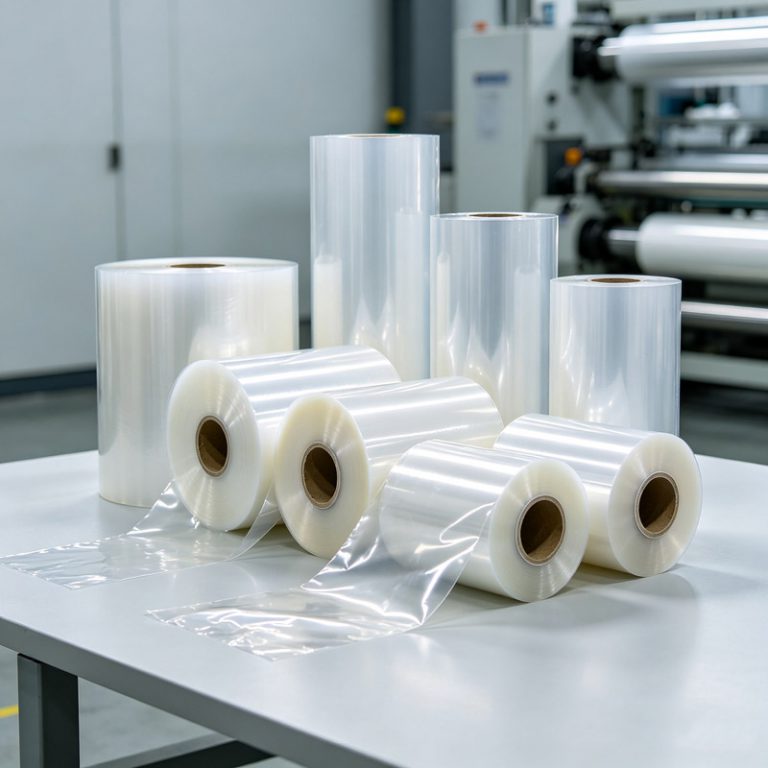
Food-Grade Co-extruded Film Multi-layer structure, OTR<1, high barrier Fresh meat, frozen food, cheese
PE Heat Shrink Film Food-grade formulation, high clarity Multi-pack bundling, tray wrapping
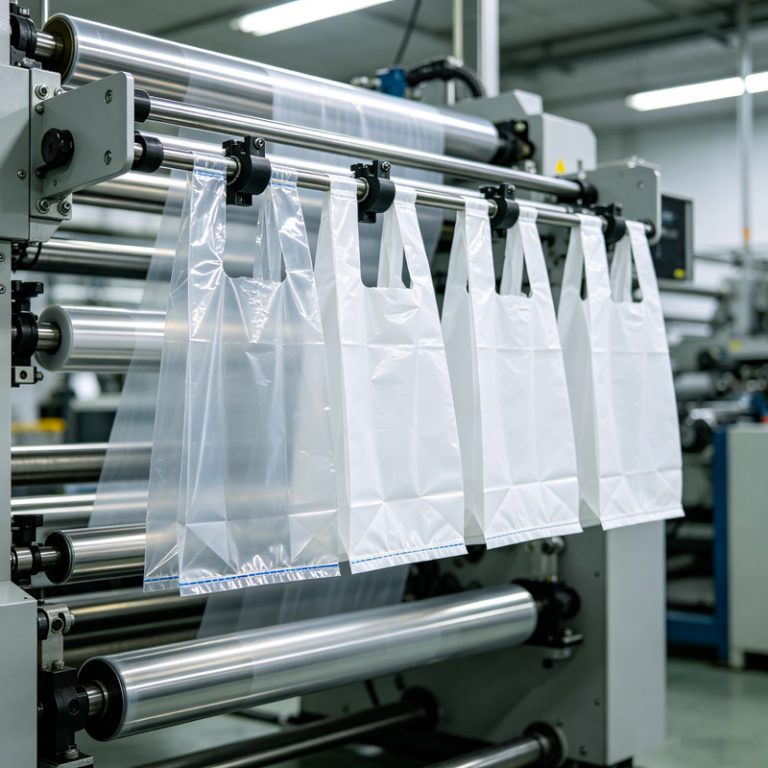
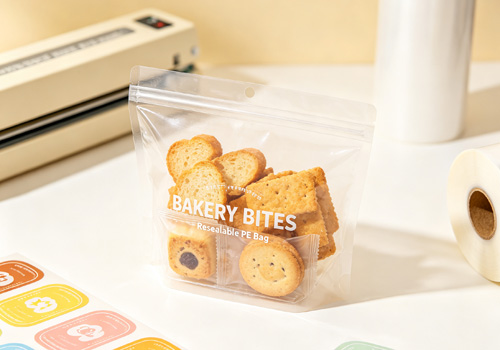
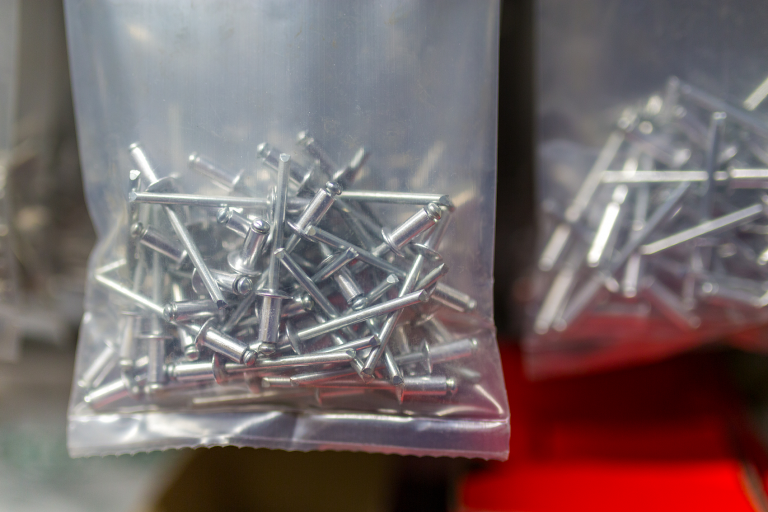
Food-Grade PE Bags Flat/gusseted/stand-up, FDA certified Snacks, grains, frozen vegetables
All-PE Recyclable Composite Film Mono-material, single-stream recyclable EU PPWR-compliant food packaging
Application Scenarios
Fresh meat vacuum skin packaging
Frozen food (vegetables, seafood, meat) packaging
Cheese, deli, dried fruit packaging
Frozen dumpling and snack packaging
Confectionery and pastry packaging
Beverage multi-pack bundling
Case Study
Case: A Frozen Vegetable Processor
Client Background: A major frozen vegetable processor in East China, exporting primarily to EU and North American markets. Annual frozen vegetable production exceeds 50,000 tons, with annual film consumption over 500 tons.
Challenge: The client faced dual pressure. Traditional PE films lacked sufficient barrier performance — frozen vegetables suffered from freezer burn (surface dehydration, discoloration, texture degradation) during long ocean shipments (typically 30-45 days), resulting in high return rates. Simultaneously, upcoming EU regulations required all packaging to be recyclable by 2030 — traditional composite films could not meet this requirement.
Solution: We developed a custom all-PE mono-material high-barrier co-extruded film — using a 5-layer co-extrusion structure, PE-specific barrier formulations achieved OTR below 1.5 cc/m²·day without using non-PE barrier materials like EVOH. The all-PE structure ensures entry into PE recycling streams. Film thickness was controlled at 40-60 microns, balancing strength and cost.
Results:
Frozen vegetable shelf life extended from 6 months to 12 months
Return rates due to freezer burn reduced by 65%
Packaging materials fully compliant with EU recyclability requirements — 3 years ahead of schedule Mono-material design increased recycling value — client earned packaging recycling credits