Introduction
The global industrial PE flexible packaging industry continues to witness transformative growth and technical upgrades in 2026. As reported by Fortune Business Insights & Grand View Research, the global flexible plastic packaging market is projected to reach USD 173.3 billion in 2026, with a steady 5.0% CAGR from 2026 to 2033. Driven by stricter environmental regulations, manufacturing automation upgrades, and rising cross-border logistics safety standards, traditional generic PE packaging is gradually being replaced by functional, sustainable, machine-adaptive PE packaging solutions. In 2026, industry competition no longer focuses on low-cost mass production but on high-quality differentiation, scenario-based customization, and eco-friendly circular packaging development.
Industrial manufacturers, automotive parts suppliers, hardware exporters, and food processing enterprises must follow the latest industrial PE packaging trends to optimize packaging specifications, reduce international compliance risks, and improve cross-border brand competitiveness. This article analyzes five key trends reshaping the industrial flexible PE packaging market from 2026 to 2027, providing reliable references for global packaging procurement and production upgrading.
1. Functional Differentiation Becomes the Core Competitive Threshold
Generic transparent PE bags and conventional shrink films face severe market homogenization and price competition in global trade. In 2026, scenario-based functional PE packaging has become the core purchasing standard for industrial buyers worldwide. Modern downstream customers prioritize customized PE films and bags tailored to product characteristics, storage environments, and cross-border logistics conditions, rather than adopting universal low-performance packaging materials.
High-demand functional PE packaging solutions include ESD anti-static PE films for precision electronics, perforated breathable PE bags for automotive metal parts, multi-layer co-extruded barrier PE films for long-term inventory storage, and puncture-resistant thick-gauge PE packaging for heavy hardware. According to the Global Packaging Industry Association (GPIA), functional industrial packaging achieves an annual growth rate of 7.2%, twice the 3.5% growth of standard generic PE packaging. This obvious growth gap indicates that functional performance upgrading has become the core competitive advantage and profit growth point for professionalindustrial PE packaging manufacturers.
2. Full-Scale Popularization of FFS Automatic Packaging Matching
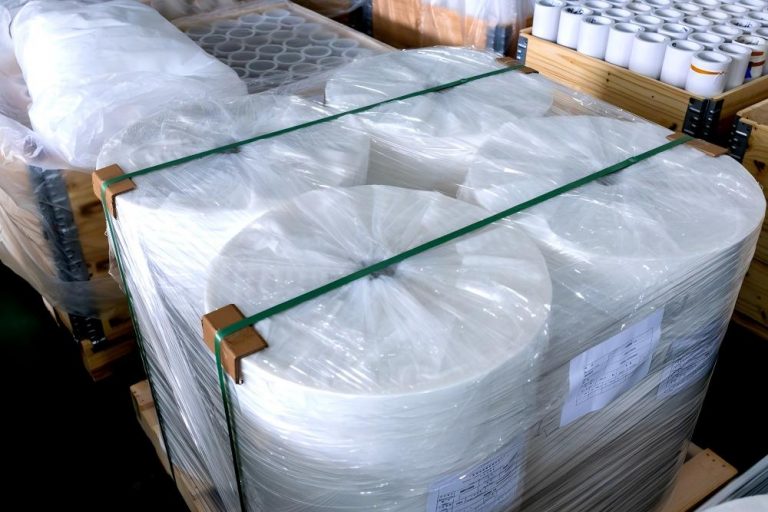
With the global manufacturing industry accelerating intelligent transformation and labor cost optimization, FFS automatic PE packaging technology has replaced manual bagging as the mainstream configuration for modern mass production lines. In 2026, market demand for traditional pre-made PE bags continues to decline, while high-precision machine-grade PE roll films for automated lines maintain rapid and stable market growth.
FFS automated packaging lines require industrial PE films with stable tension, uniform friction coefficient, precise thickness tolerance, and high-speed operational flatness. The 2026 Global Manufacturing Automation Upgrade Report verifies that over 68% of medium and large global manufacturers have upgraded from manual packaging to fully automatic FFS lines during 2025–2026. Ordinary manual-grade PE films fail to meet high-speed operational standards, driving the industry to iterate toward machine-dedicated, zero-defect industrial PE roll films. Correspondingly, global demand for FFS-grade PE films has risen 19.4% year-on-year, forming an irreversible substitution trend in large-scale industrial packaging scenarios.
3. Global Sustainability & Recyclable Mono-Material Policy Upgrade
Escalating green packaging policies across Europe, North America, and Oceania are driving comprehensive upgrades in industrial packaging materials. Mono-material recyclable PE packaging has become the preferred export packaging solution for multinational brands, effectively solving the recycling difficulties of multi-layer composite packaging and meeting global low-carbon and sustainable packaging standards.
Global industrial and food manufacturers have incorporated sustainable packaging standards into supplier audit systems, requiring recyclable mono-material formulas and standardized low-carbon production processes. Per 2026 industrial procurement data from Business Research Insights, more than 64% of international bidding projects regard sustainable packaging compliance as a mandatory assessment index. By 2027, non-recyclable composite packaging will face gradual market elimination and policy restrictions in Western mainstream markets. In cross-border certification, mono-material PE packaging achieves a 92% environmental compliance rate, far exceeding the 57% pass rate of composite packaging, proving its dominant advantages for export industrial packaging.
4. Higher Requirements for Printing Clarity & Traceability Identification
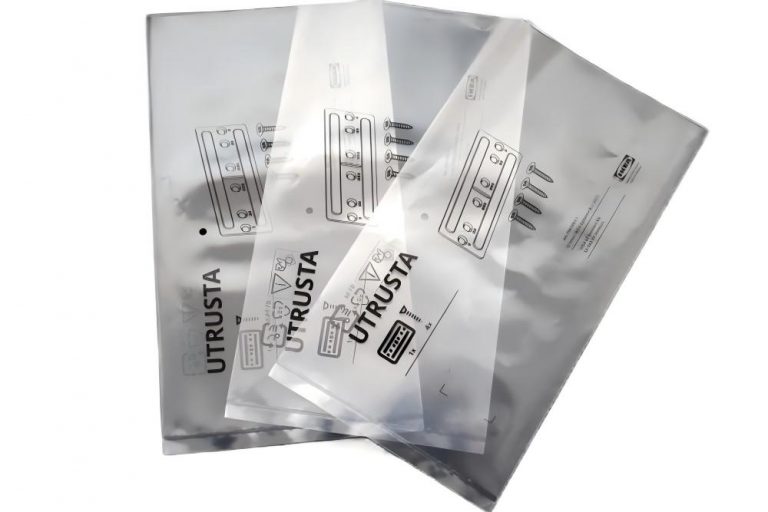
Standard marking, batch traceability, and brand identification have become basic mandatory requirements for qualified industrial export PE packaging. Traditional simple ink printing is gradually phased out, replaced by high-precision gravure printing, high-resolution barcode printing, and fade-resistant logo processing to adapt to strict global supply chain quality standards.
Cross-border logistics requires industrial PE packaging to maintain stable color consistency, scratch-resistant ink adhesion, and excellent temperature and humidity resistance to ensure the legibility of logos, part numbers, and tracking codes during long-distance sea freight. The 2026 Cross-Border Supply Chain Traceability Report shows that export orders using standardized traceable PE packaging reduce customs rejection rates by 31% and increase customer repurchase rates by 27%. At present, high-precision, weather-resistant printed PE packaging has become a key evaluation standard for international buyers to select reliable packaging suppliers.
5. Zero-Defect & High-Stability Industrial-Grade Packaging Standardization
In past industrial procurement, minor packaging defects were generally acceptable. However, the 2026 industrial packaging market led by automotive electronics, precision machinery, and food industries has fully implemented zero-defect industrial PE packaging standards, significantly raising the overall industry quality threshold.
The industrial PE packaging industry is shifting from basic functional usability to high-standard, stable, and standardized industrial-grade packaging. Modern manufacturers focus on core indicators including heat-seal consistency, thermal shrinkage uniformity, film tension stability, and batch repeatability. According to the 2026 Global Industrial Packaging Quality Audit White Paper, enterprises adopting zero-defect packaging management reduce cross-border logistics damage complaints by 43% and effectively lower after-sales costs. Stable and standardized PE packaging quality has become a critical audit index for high-end industrial and food-grade supply chain certification.
Conclusion
From 2026 to 2028, the global industrial PE flexible packaging industry will develop along five core directions: functional specialization, automation adaptation, green sustainability, quality standardization, and precise traceability. Authoritative forecasts indicate that the high-end functional PE packaging segment will maintain a CAGR of over 7% in the next three years, outperforming ordinary generic packaging. While homogenized low-cost packaging faces intense price competition, high-stability, compliant, and customized industrial PE packaging will continue to occupy high-value cross-border export markets.
Enterprises that adapt to FFS automation, functional customization, and global green packaging trends will gain long-term market competitiveness. Paiki provides professional industrial-grade customized PE films, roll stocks, and trend-compliant printed packaging solutions that meet international standards, offering one-stop technical consultation and customized packaging support for global industrial exporters.
Reference
[1] Fortune Business Insights, Grand View Research. Global Flexible Plastic Packaging Market Size, Growth Analysis and Forecast Report (2026–2033)
[2] Global Packaging Industry Association (GPIA). 2026 Industrial Functional Packaging Market Segmentation Statistics Report
[3] Global Manufacturing Automation Upgrade Report 2025–2026. Intelligent Packaging Line Iteration & Industry Substitution Data
[4] Business Research Insights. 2026 Global Industrial Sustainable Packaging Procurement Compliance Analysis
[5] Cross-Border Supply Chain Traceability Report 2026. Packaging Standardization & Customs Clearance Efficiency Data [6] 2026 Global Industrial Packaging Quality Audit White Paper. Zero-Defect Packaging Management & Supply Chain Optimization Data