Introduction
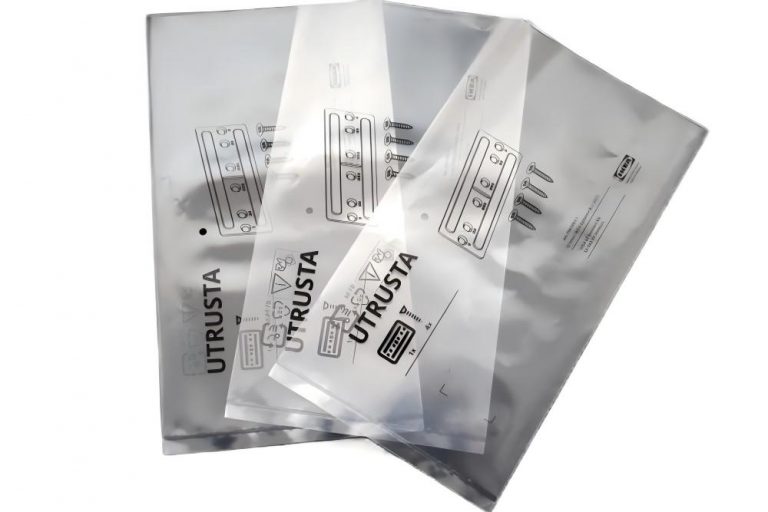
LDPE clear flat PE bags are the most widely used industrial packaging materials for hardware parts, electronic accessories, and general industrial components. Unlike complex composite packaging materials, LDPE film features soft texture, excellent melt fluidity and stable heat sealability, making it suitable for manual, semi-automatic and fully automatic heat sealing operations.
Most packaging defects such as weak seal strength, seal edge cracking, wrinkling, and bag mouth melting are not caused by poor bag quality, but by incorrect heat sealing temperature, pressure and dwell time. This article summarizes standardized heat sealing parameter settings for different thickness LDPE clear bags, analyzes common sealing failures, and provides practical adjustment tips to help factories improve packaging qualification rate and reduce material waste.
Basic Heat Sealing Principle of LDPE Material
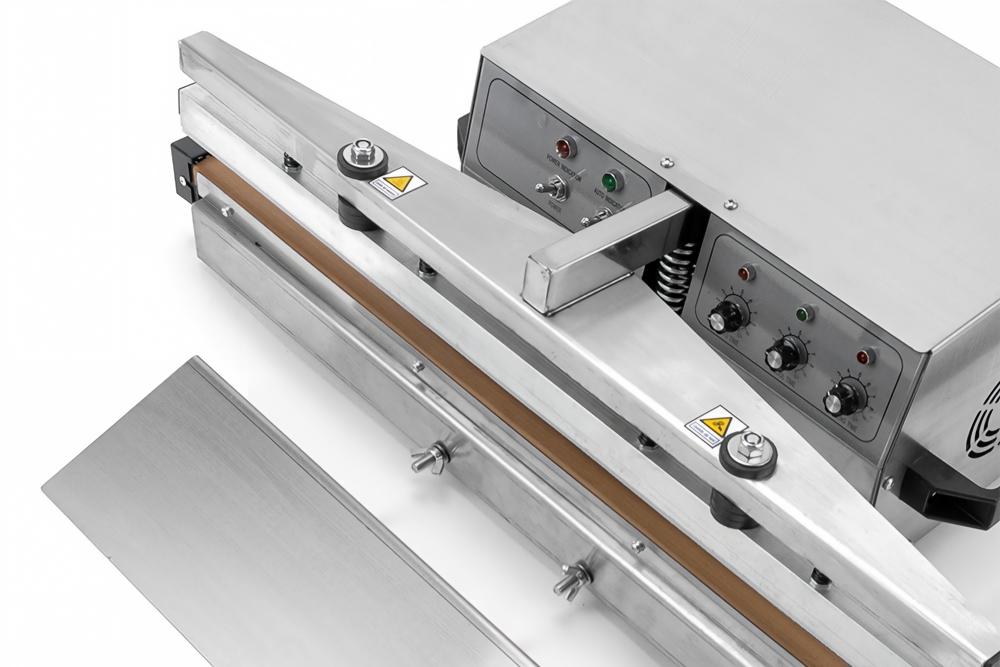
LDPE (Low-Density Polyethylene) has a low melting point and good thermal fusion performance. The heat sealing process relies on external heating to melt the double-layer PE film surface, and combines the two film layers into one integrated structure through instantaneous pressure cooling.
The core of qualified heat sealing is to achieve complete molecular fusion without over-melting. Insufficient heat leads to virtual sealing and easy peeling, while excessive heat causes film thinning, edge cracking and transparent scorching marks, affecting both sealing firmness and packaging appearance.
Standard Heat Sealing Parameter Settings by Film Thickness
Thickness is the most critical basis for heat sealing parameter adjustment. Thicker LDPE bags require higher temperature and longer pressure holding time, while thin films need lower heat to avoid melting damage.
30μm – 50μm (Light-Duty Thin Bags)
Ideal for light plastic parts, small smooth fasteners and short-term storage packaging. Recommended temperature range: 110℃ – 130℃. Adopt light pressure and short dwell time (0.2–0.4 seconds). Excessively high temperature will directly burn through the thin film, causing bag mouth damage. This thickness is suitable for fast manual sealing operations with low load-bearing requirements.
50μm – 80μm (Standard Industrial Bags)
This is the most common specification for daily industrial packaging and export shipment. Recommended temperature range: 130℃ – 155℃. Match medium pressure and 0.4–0.6 seconds holding time. The parameters ensure uniform melting of the seal edge, firm adhesion and flat and wrinkle-free sealing effect, fully meeting conventional hardware parts packaging and logistics transportation requirements.
80μm – 120μm (Heavy-Duty Thick Bags)
Suitable for sharp stamped parts, heavy metal fittings and long-distance sea export packaging. Recommended temperature range: 155℃ – 175℃. Increase sealing pressure appropriately and extend dwell time to 0.6–0.9 seconds. Thick LDPE film has strong heat resistance, requiring sufficient heat penetration to avoid incomplete internal fusion and delamination after packaging stacking.
Key Factors Affecting Heat Sealing Quality
Ambient Temperature & Humidity
In low-temperature winter environments, the film surface temperature is low, and heat loss is fast during sealing. It is necessary to increase the temperature by 5–10℃ appropriately. In high-humidity workshops, water vapor on the film surface will affect thermal fusion, leading to intermittent weak sealing. Keeping the packaging environment dry and constant temperature can effectively stabilize sealing quality.
Sealing Machine Working State
Dirty or worn sealing blades will cause uneven heat conduction, resulting in partial missing seal and stripe-shaped weak sealing. Regular cleaning of blade carbon deposits and replacement of aging high-temperature adhesive tape are necessary maintenance steps to ensure consistent heat sealing effect.
Packaging Running Speed
For semi-automatic and automatic line sealing, fast running speed reduces actual heat receiving time of the film. It is required to increase the set temperature appropriately according to the line speed to compensate for heat loss and avoid a large number of virtual sealing defective products in batch production.
Common Heat Sealing Defects & Troubleshooting
Weak Seal & Easy Peeling
Main causes: low temperature, insufficient pressure, or too fast sealing speed. Solution: Gradually increase the heating temperature, appropriately increase mechanical pressure, and reduce the equipment running speed to ensure complete fusion of the double-layer film.
Seal Edge Wrinkle & Warping
Main causes: uneven blade pressure or inconsistent heating temperature. Solution: Calibrate the horizontal balance of the sealing blade and clean residual dirt on the blade surface to ensure uniform stress and heating.
Film Melting & Edge Cracking
Main causes: over-high temperature or excessive pressure. Solution: Reduce the set temperature in time and adjust the pressure value to avoid excessive extrusion and melting thinning of the seal edge.
Frequently Asked Questions
Q1: Can all thickness LDPE bags use the same sealing temperature?
A: No. Thin films are prone to burn-through at high temperature, while thick films cannot be completely fused at low temperature. Parameters must be adjusted according to the actual film thickness to achieve the best sealing effect.
Q2: Why are some sealed edges tight at first but split after transportation?
A: This belongs to virtual sealing caused by insufficient heat penetration. The surface looks sealed, but the internal molecules are not completely fused. Vibration and extrusion during transportation will cause crack failure.
Q3: Does printed LDPE bag require different sealing settings?
A: Yes. Avoid sealing on printed ink areas as ink affects thermal fusion. If printing overlaps the sealing edge, appropriately increase the temperature by 5–10℃ to offset the impact of ink layer.
Q4: How to judge whether the heat sealing parameter is qualified?
A: After cooling, manually pull the seal edge slightly. Qualified sealing will show film body tearing instead of interface peeling, which is the most effective on-site inspection standard.
Conclusion
Stable heat sealing quality of LDPE clear flat PE bags depends on accurate matching of temperature, pressure and dwell time based on film thickness. Standard thin films adapt to low-temperature fast sealing, standard industrial specifications apply medium conventional parameters, and heavy-duty thick bags need higher temperature and longer pressure holding time. Reasonable parameter adjustment can effectively eliminate virtual sealing, edge cracking and wrinkling defects, improving the stability of industrial batch packaging and export transportation. If you need targeted heat sealing parameter guidance for your customized clear PE bags or on-site packaging machine debugging suggestions, contact Paiki for professional technical support and free sample testing.